
The U.S. outpatient physical therapy sector represents a large, essential, and steadily expanding segment of the broader musculoskeletal healthcare services market. Demand is driven by aging demographics, rising chronic pain and mobility impairment, increasing orthopedic procedure volumes, and payer preference for conservative, non-surgical treatment pathways.
While reimbursement complexity and therapist shortages present operational challenges, well-run physical therapy practices with diversified referral sources, stable therapist retention, and scalable clinic models continue to attract strong buyer interest from strategic consolidators and private equity-backed healthcare platforms.
For practice owners, current market conditions present an attractive valuation environment. Structural demand tailwinds, increasing administrative complexity, and accelerating consolidation favor professionally managed multi-location operators, driving premium valuations for practices with predictable referral pipelines and reduced owner dependence.
Outpatient physical therapy is a foundational service within the U.S. healthcare system, delivering rehabilitation, mobility restoration, and pain management across orthopedic, neurologic, and post-surgical populations.
According to national industry benchmark data:
The industry remains highly fragmented, with most operators running single-location or small multi-clinic practices. This fragmentation has fueled continued consolidation as buyers seek scale in billing operations, therapist recruitment, and payer contract leverage.
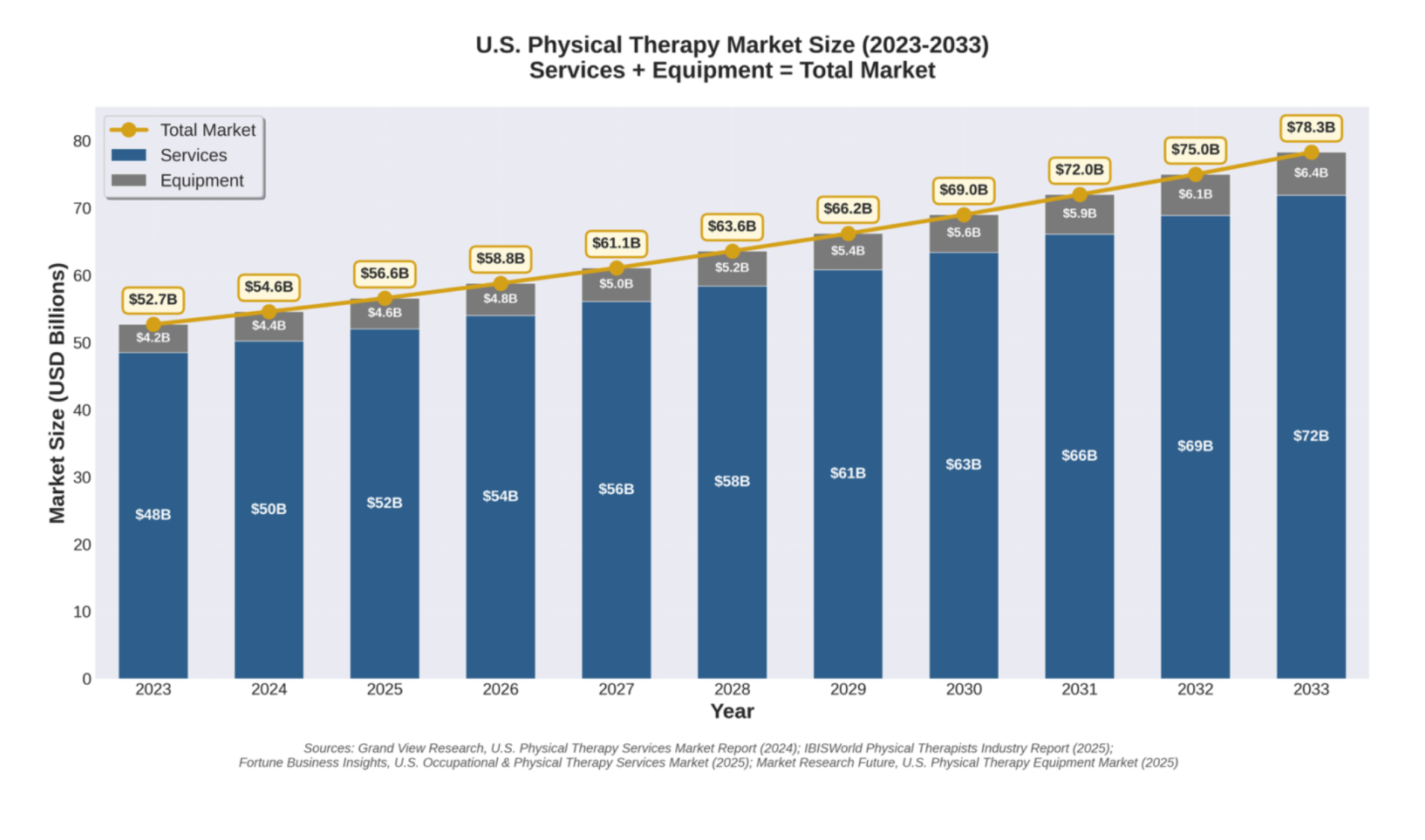
Demand for outpatient physical therapy services is expected to remain resilient over the coming decade. Historical industry growth has averaged approximately 3.9% annually, with forward growth projected at approximately 3.1% annually.
Long-term growth is supported by aging demographics, rising musculoskeletal disorder prevalence, increased orthopedic procedure volumes, and payer emphasis on conservative treatment prior to surgical intervention. While growth is expected to moderate slightly, fundamentals remain strong, and utilization continues to rise across post-acute, preventative, and occupational health settings.
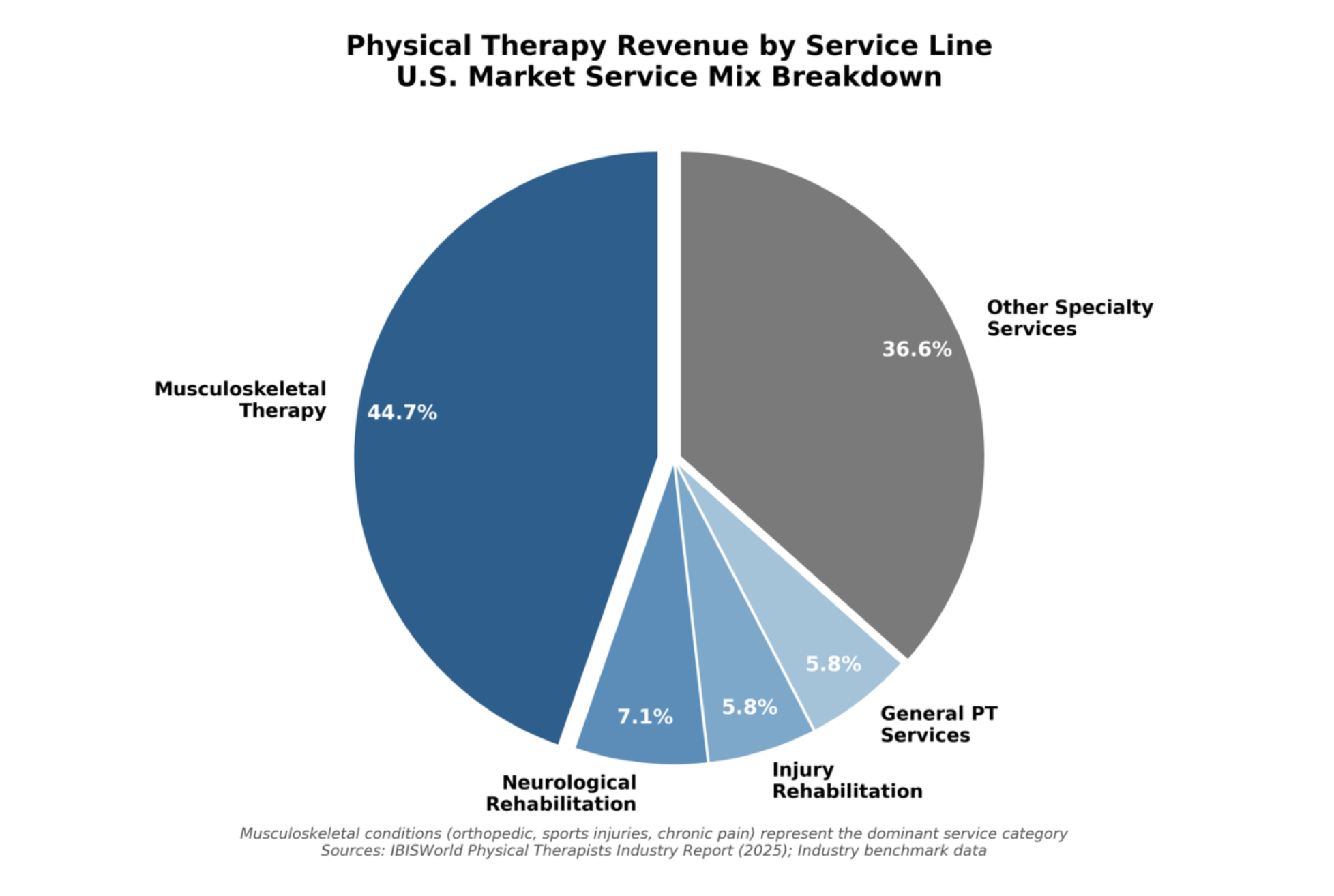
Physical therapy demand is primarily driven by musculoskeletal and injury-related conditions:
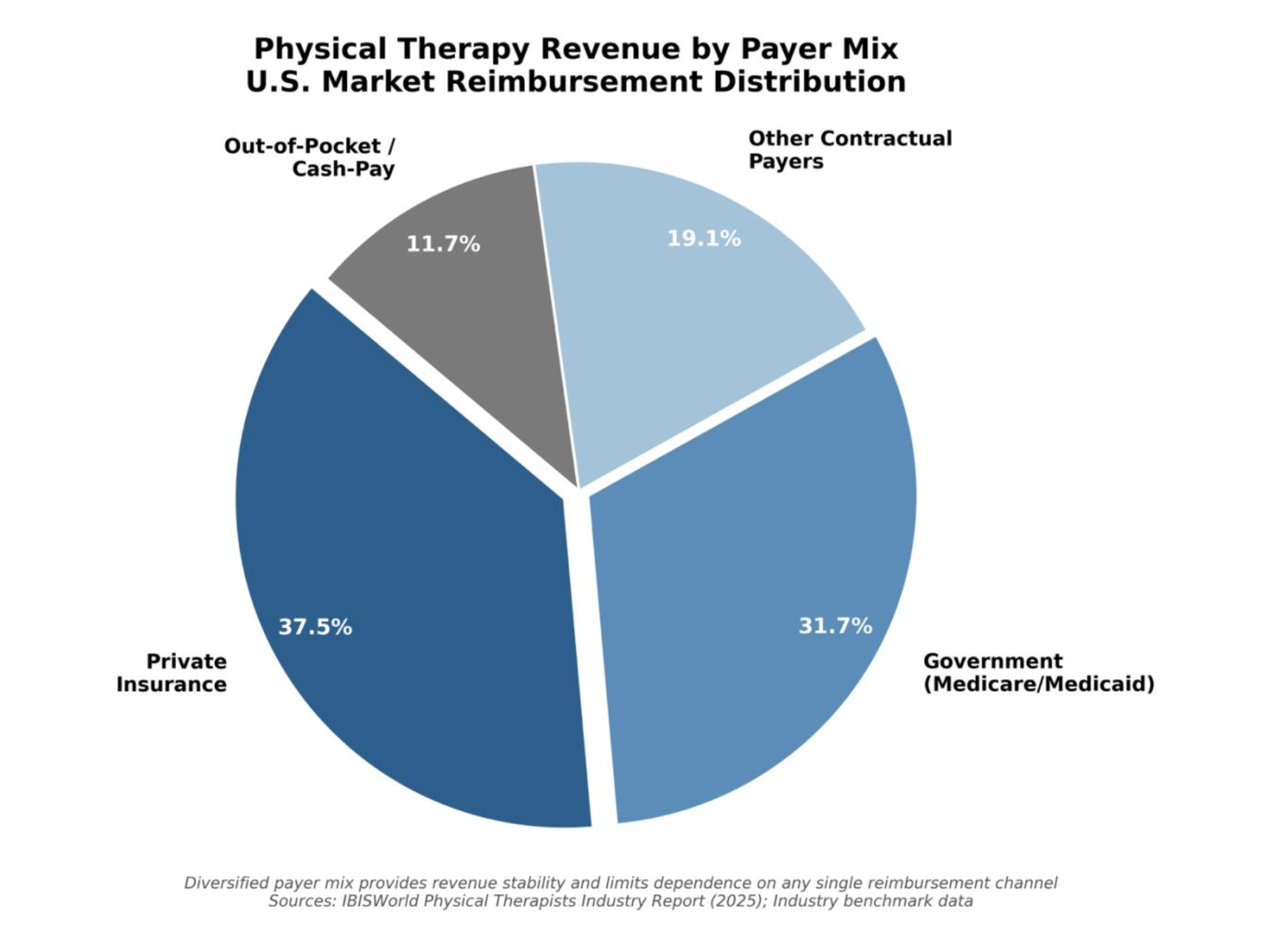
This diversified payer mix provides revenue stability while limiting dependence on any single reimbursement channel.
Physical therapy plays a growing role in national healthcare strategy by reducing opioid reliance, lowering surgical intervention rates, and improving post-operative outcomes. Payers increasingly encourage therapy as a first-line treatment, reinforcing long-term utilization growth.
Margins in outpatient physical therapy are primarily determined by therapist labor costs, visit volume per provider, payer reimbursement rates, and scheduling efficiency.
Typical industry cost structure:
Strong practices outperform benchmarks through higher therapist utilization, optimized scheduling, and disciplined billing procedures.
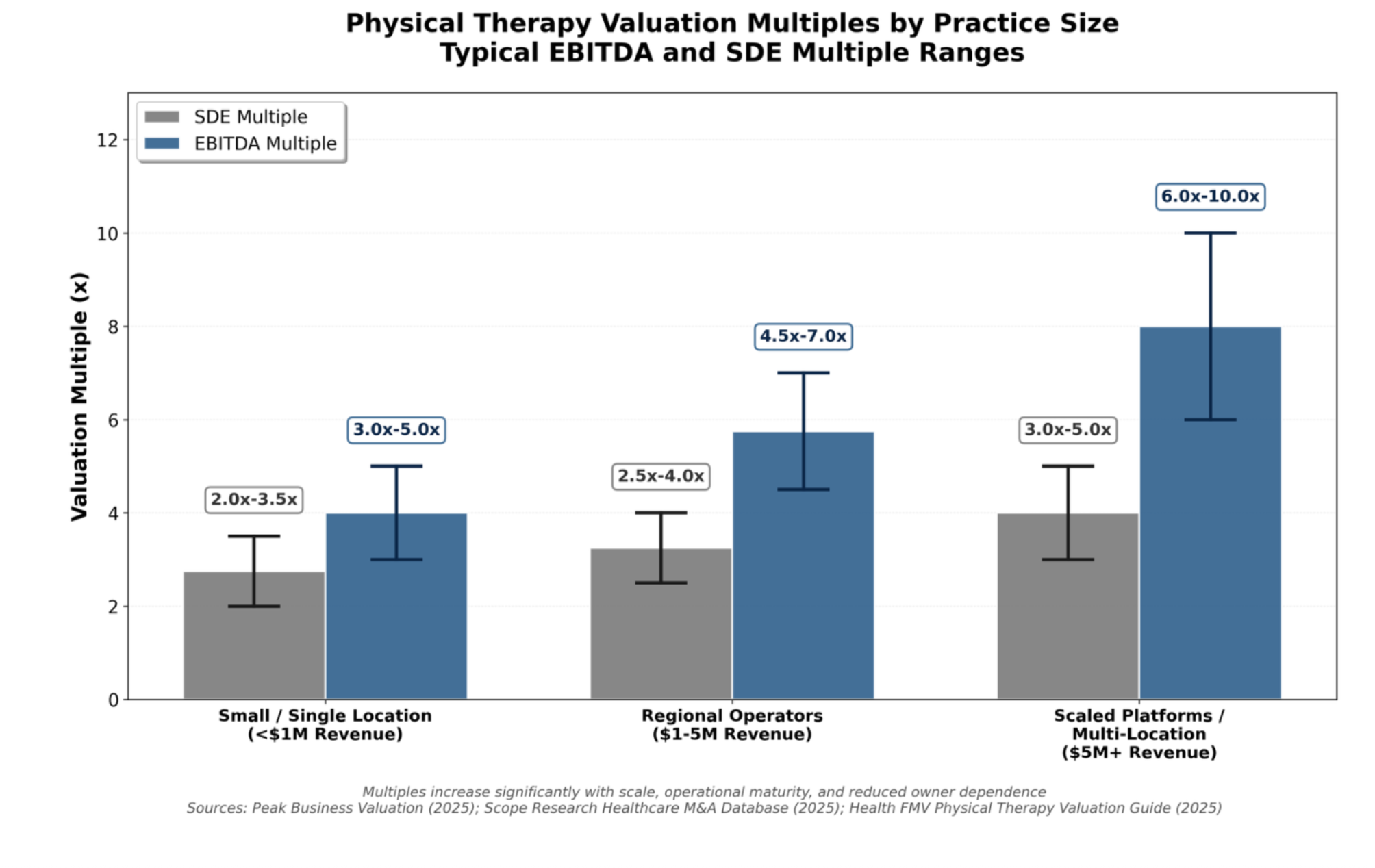
Valuation multiples vary significantly based on practice size, referral stability, therapist retention, billing compliance infrastructure, and owner dependence.
Smaller owner-operated clinics typically trade at lower multiples due to concentrated referral relationships and heavy owner involvement. Multi-clinic groups with centralized billing operations and diversified referral pipelines achieve premium valuation multiples.
A growing and stable patient volume is one of the most important KPIs for buyers. Key focus areas include:
Industry best practice suggests no single referral source should contribute more than 5% of total revenue.
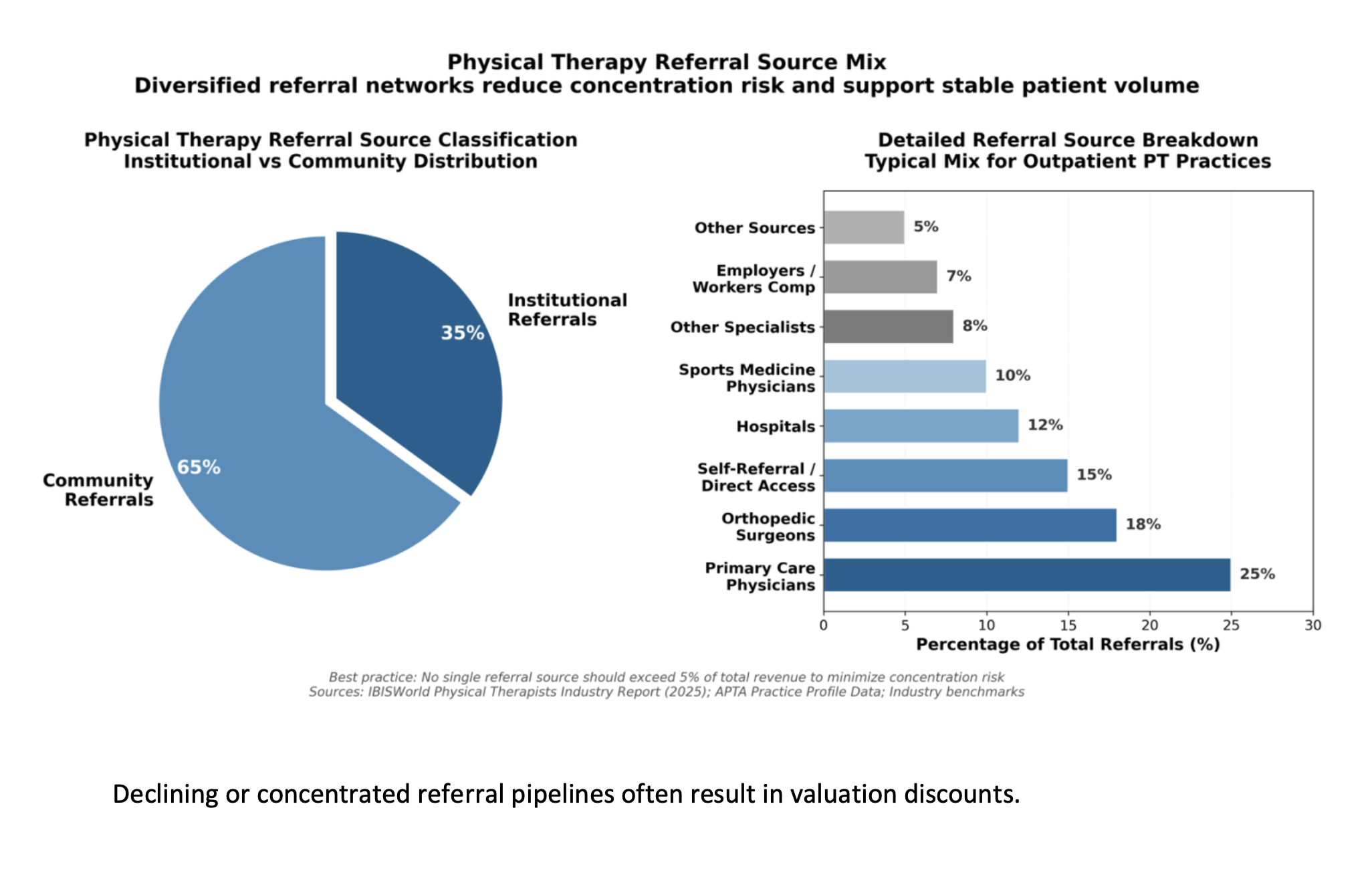
Declining or concentrated referral pipelines often result in valuation discounts.
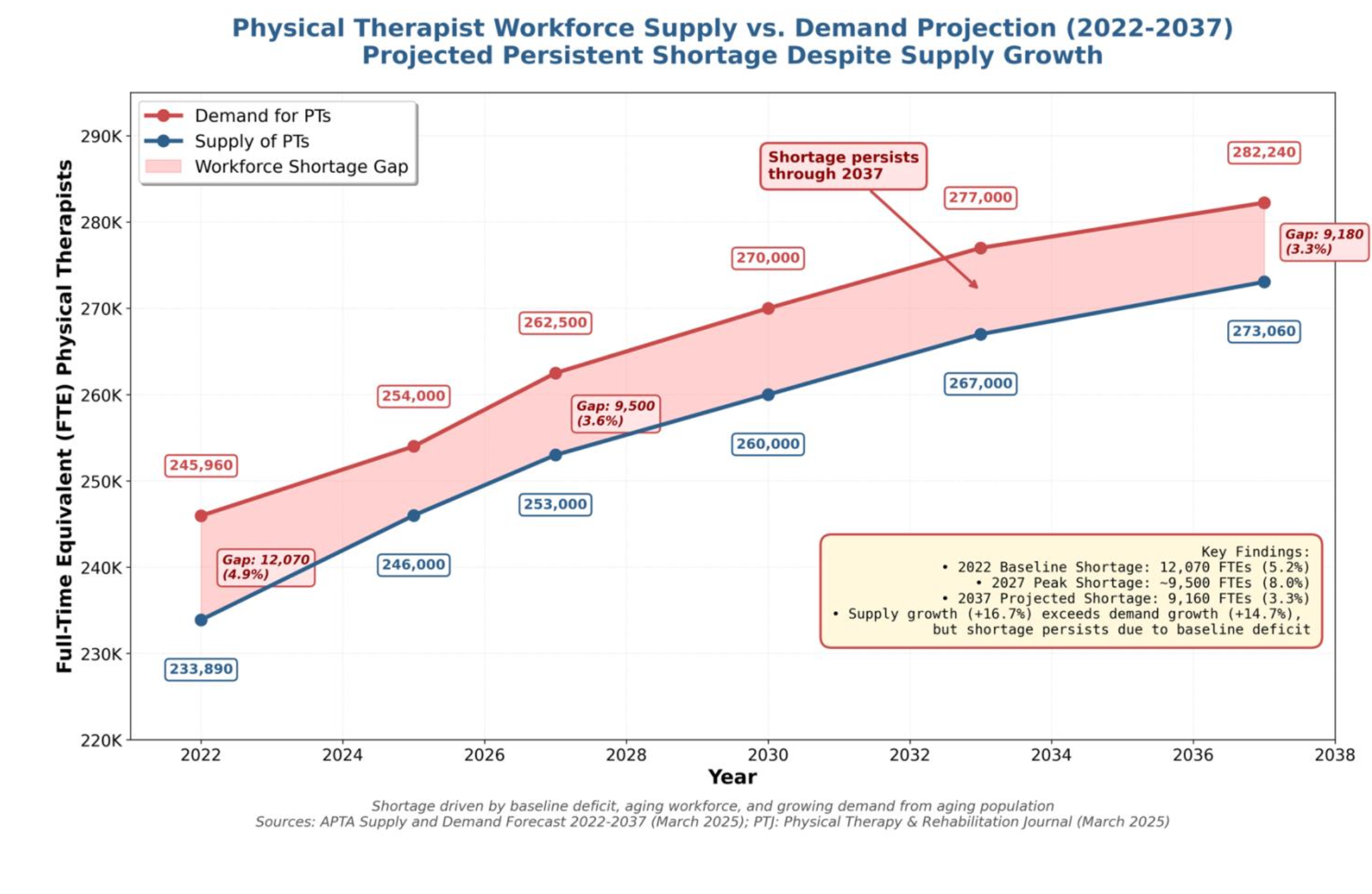
Therapist recruitment and retention represent the largest operational challenge in the sector. Buyers evaluate:
Practices with stable therapist rosters command premium multiples due to reduced service disruption and higher patient retention.
Businesses heavily dependent on the owner for clinical care, referral management, or billing oversight typically receive valuation discounts of 0.5–1.0× SDE.
Institutional buyers favor practices with:
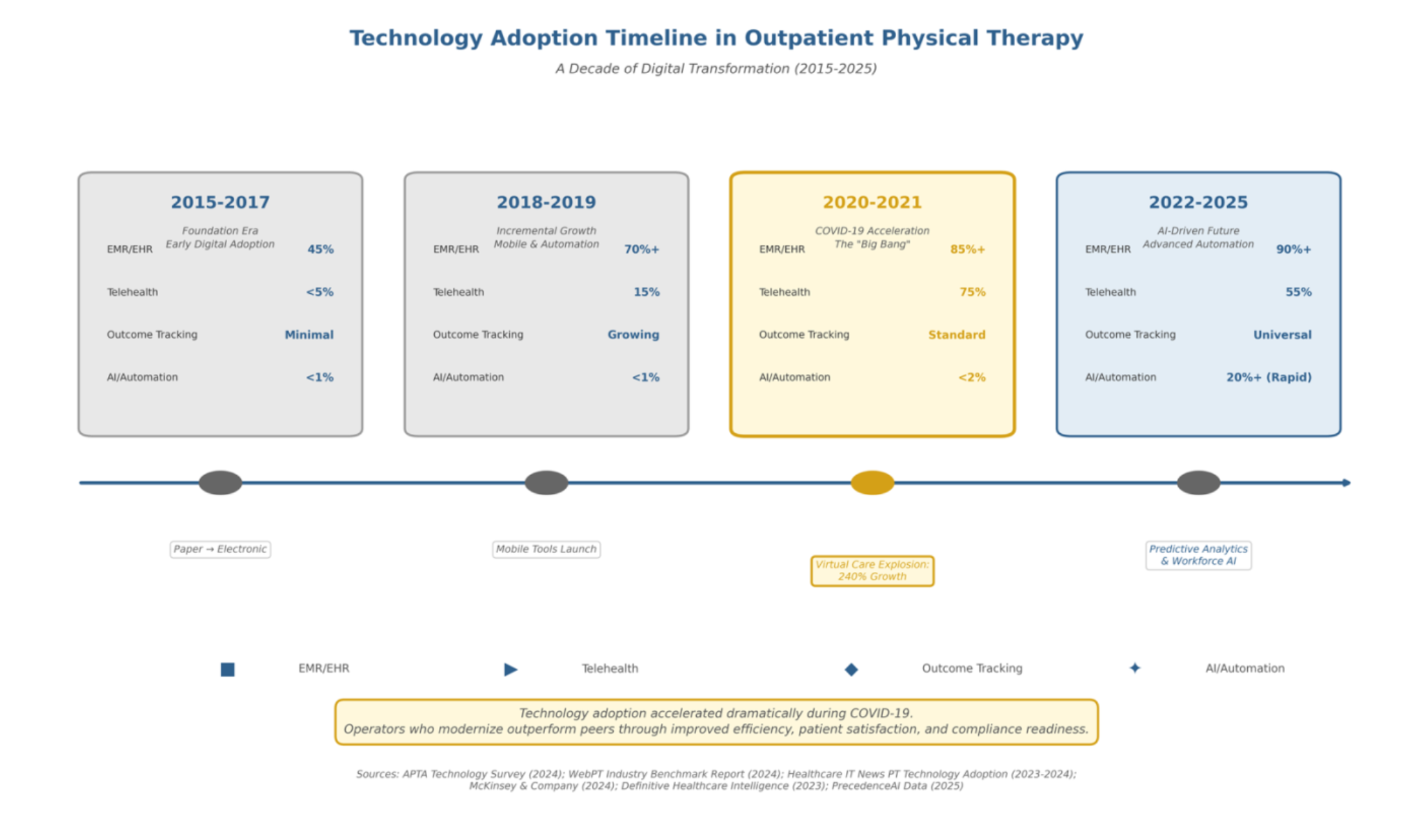
The sector is undergoing modernization as clinics adopt:
Operators that integrate technology outperform peers in efficiency, compliance, and patient retention.
Private equity investment in physical therapy continues to increase as firms seek scalable multi-clinic platforms with:
Well-run platforms with $3M+ EBITDA can achieve premium transaction multiples.
National workforce studies project physical therapist shortages through 2037. Leading practices differentiate through:
Larger transactions favor operators with professionalized management teams, multi-clinic density, and reduced owner dependence.
The outpatient physical therapy sector is positioned for continued long-term expansion driven by demographic necessity and payer preference for lower-cost conservative care. While reimbursement pressure and labor shortages remain, these dynamics reinforce consolidation toward larger, professionally managed multi-clinic operators.
Sophisticated practices with demonstrable earnings quality, diversified referral sources, stable staffing, and robust billing infrastructure are achieving the highest valuations in the sector's history. For many owners, the current environment represents an attractive window to maximize value before further margin compression disadvantages smaller owner-dependent practices.
Northeastern Advisors is an independent M&A advisory and business brokerage firm headquartered in New York serving lower-middle-market business owners and acquirers. We specialize in advising founder-led and privately held companies on business sales, capital raises, acquisitions, and strategic alternatives, with a focus on disciplined analysis, confidentiality, and senior-level execution throughout the transaction process.
Within the outpatient physical therapy sector, we work with clinic owners seeking to monetize their businesses, raise growth capital, or pursue acquisitions to scale operations. Our team has experience positioning healthcare service providers for sale, preparing valuation analyses, running competitive buyer processes, and structuring transactions that maximize value while ensuring smooth post-close transitions.
We maintain an extensive network of strategic acquirers, private equity-backed therapy platforms, family offices, and operator-led investment groups actively seeking to invest in and acquire physical therapy practices. This connectivity allows us to efficiently match high-quality operators with well-capitalized buyers and deliver premium transaction outcomes.
For confidential discussions regarding valuation, market conditions, or strategic options, interested parties may contact the firm directly.
Northeastern Advisors
www.northeasternadvisors.com
us@northeasternadvisors.com